
AI Brief
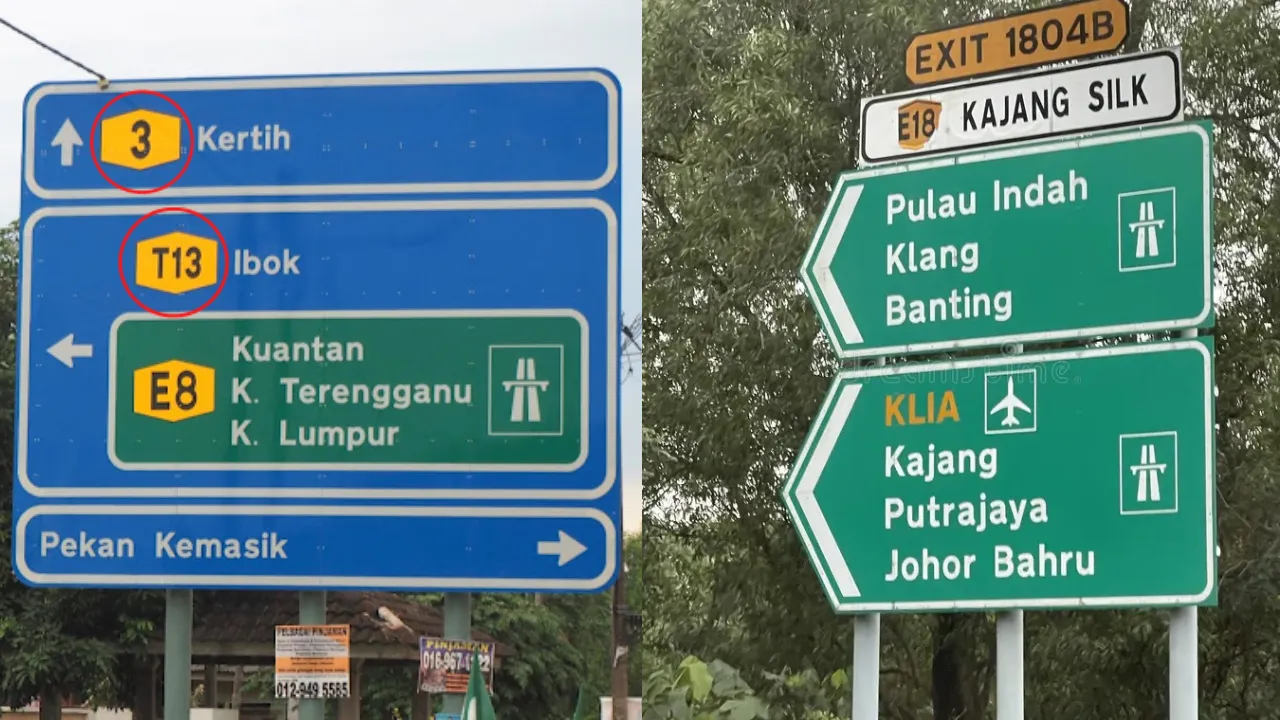
- Signboard colours in Malaysia help drivers identify road types: blue for toll-free roads, green for tolled expressways, and brown for tourist or cultural sites.
- The yellow hexagon with letters and numbers indicates road classification, such as 'E' for expressways, numbers for federal roads, and state letters for state roads.
- Text colours on signs provide extra info, like white text on blue for towns, yellow text on blue for road names, and black text on white for city or village names.
Most of us probably don’t give road signs much thought unless we’re trying to find an exit or looking for directions to our destination. But beyond the words and arrows, the colours on road signs actually communicate different types of information to road users.
Here’s a closer look at what Malaysia’s road sign colours mean and how they help drivers navigate the roads:
1. Green and blue signboards
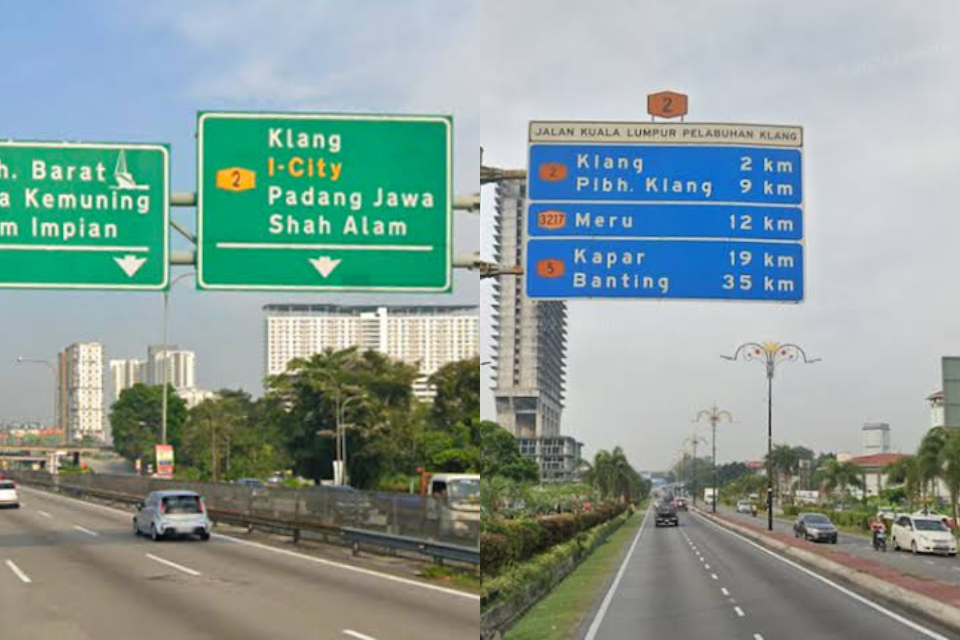 Image Credit: RiseMalaysia
Blue signboards are used on federal, state, and municipal roads. They also indicate that the road is toll-free.
Meanwhile, green signboards are used on expressways and highways that charge tolls.
2. The letters and numbers inside the yellow hexagon
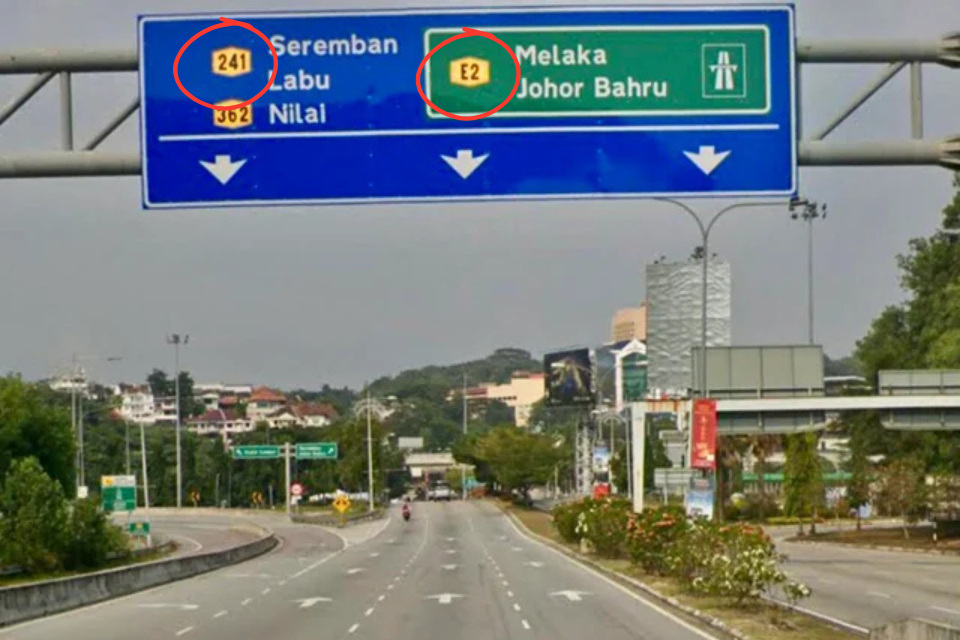 Image Credit: Reddit
The yellow hexagon containing black letters and numbers is usually found on the left side of a road sign. There are three variations of this symbol, each serving a different purpose:
- The letter 'E': The black letter "E" inside the yellow hexagon stands for "Expressway". The number that follows identifies the specific expressway route.
- Numbers only: These are used to identify federal roads.
- Letters and numbers (other than 'E'): These are used for state roads. The letter represents the state (for example, "B" for Selangor and "A" for Perak), while the number identifies the specific state-maintained route.
3. Different-coloured text on blue and green road signs
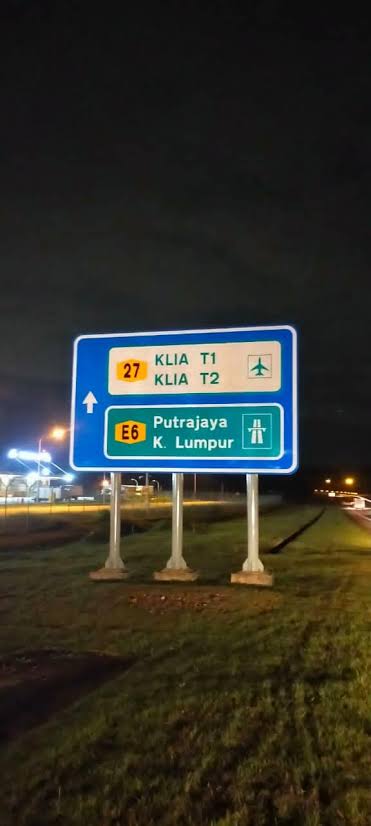 Image Credit: Flickr
- White text on a blue signboard: Indicates a town or area name.
- Yellow text on a blue signboard: Indicates a specific road name.
- Green text on a white background: Indicates government-related premises.
- Yellow text on a green background: Indicates government buildings.
- Black text on a white background: Indicates the name of a city, town, or village.
4. Brown signboards
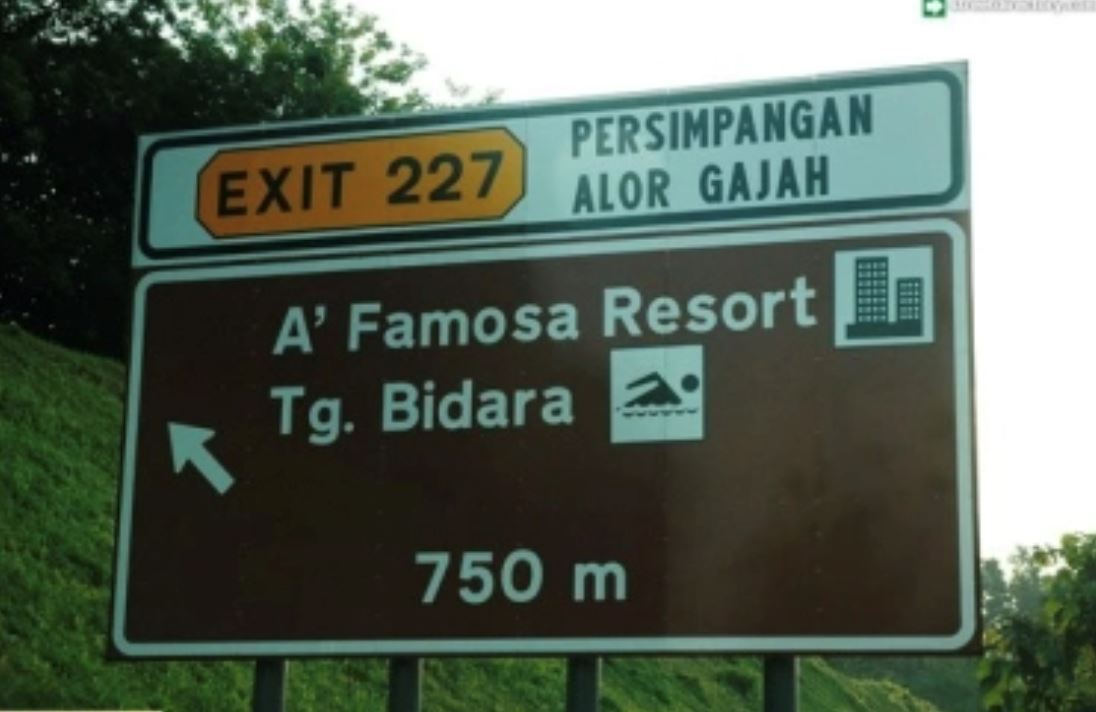 Image Credit: Hitz
Brown signboards are used to indicate tourist attractions, cultural sites, historical landmarks, parks, and recreational areas.
5. Destination, directional, and distance signs
At first glance, these signs may look similar, but each serves a distinct purpose in guiding drivers.
Destination signs
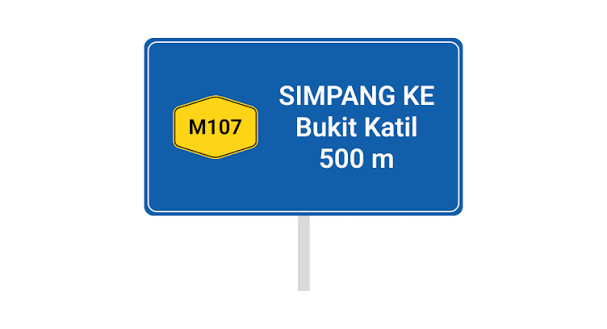 Image Credit: Kurnia Insurance
Destination signs alert drivers to major upcoming cities, towns, or locations. They are typically placed well before a junction or exit, often around 1km or 500m ahead.
Directional signs
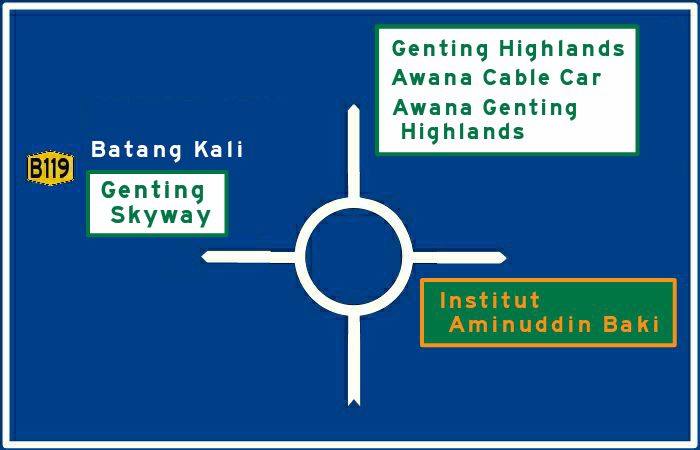 Image Credit: Wikimedia
Directional signs provide route guidance and turning instructions, such as whether drivers should turn left, turn right, or continue straight ahead. They are usually installed closer to the junction or exit, commonly around 100m to 150m away.
Distance signs
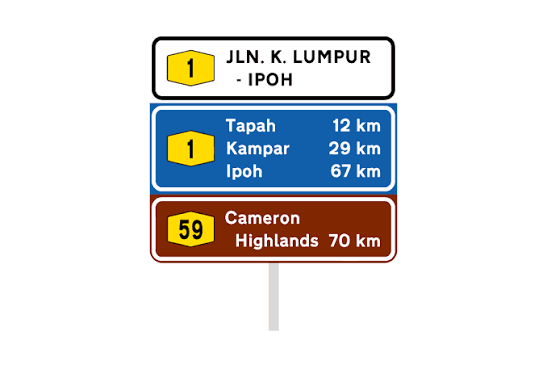 Image Credit: Kurnia Insurance
Distance signs indicate how far major destinations are from the driver's current location. They are usually placed about 200m after a junction or approximately 150m after an acceleration lane.
While they may seem like simple signboards, understanding the meaning behind their colours, symbols, and layouts can make navigating Malaysian roads much easier.
Featured Image Credit: Blogspot, Dreamstime
You may be interested in

[NEW] Tracey Easy Off-Trail Card Holder With Lanyard Dompet Kad Wanita

GJ Jewellery Emas Korea Emas Bangkok 24K Woman Anklet Daun/Jubin Sliver Gold/Gila-gila Love (26cm-27cm) GA-8

[REJURAN] Turnover Mask 5 Sheets | Hydration, Skin Renewal, Soothing, Glow

Popia Udang Gulung Dapur Ummi