

AI Brief
- The Malaysian government has banned all civil servants from using the Waze navigation app with immediate effect over concerns regarding the security of users' personal data.
- Prime Minister Datuk Seri Anwar Ibrahim has advised Malaysians to be cautious when using Waze, citing concerns that the app, which originated in Israel, could be subject to Israeli laws.
- Alternatives such as TuJu, Google Maps, Apple Maps and Amap are now among the navigation apps that users can consider for their daily commutes in Malaysia.
The Malaysian government has banned all civil servants from using the popular navigation app Waze, effective immediately.
According to reports, the ban was outlined in a letter signed by Chief Secretary to the Government Tan Sri Shamsul Azri Abu Bakar. It is understood that the decision was made during a National Cyber Security Committee meeting chaired by Prime Minister Datuk Seri Anwar Ibrahim.
"The government cannot compromise on the security of Malaysians' data and identities."
During the meeting, Anwar reportedly advised Malaysians against using Waze, which was founded in Israel in 2008 by three Israeli entrepreneurs. Google later acquired the navigation app in June 2013 for approximately US$1.15 billion.
Anwar cited concerns over the security of users' personal data and location information, which he said could be subject to Israeli laws.
 Image Credit: Scoop
In 2017, Malaysia was reported to have one of the highest numbers of Waze users in Asia, with approximately six million monthly active users. In Kuala Lumpur alone, there were an estimated 2.5 million Waze users generating nearly 1.2 million traffic alerts every month.
According to a report by FMT, Anwar also discussed the security of MyDigital ID and the emerging risks posed by autonomous artificial intelligence.
He added that the government is working to strengthen its integrated identity system, with MyKad serving as the physical credential and MyDigital ID facilitating digital transactions. The system will also be supported by enhanced cybersecurity measures.
These efforts are intended to ensure that the digitalisation of public services continues to benefit the public without compromising security, trust or national sovereignty.
Malaysia is not the only country to impose restrictions on Waze. Iraq has announced a complete ban on the navigation app, which is expected to take effect in early 2027, citing concerns over its Israeli origins and data security.
Iran has also previously blocked and restricted access to Waze due to its links to Israel.
No Waze, then what?
Many Malaysians rely on navigation apps to get them from one place to another. While the latest ban only affects civil servants, some users have already begun looking for alternative navigation options.
TuJu
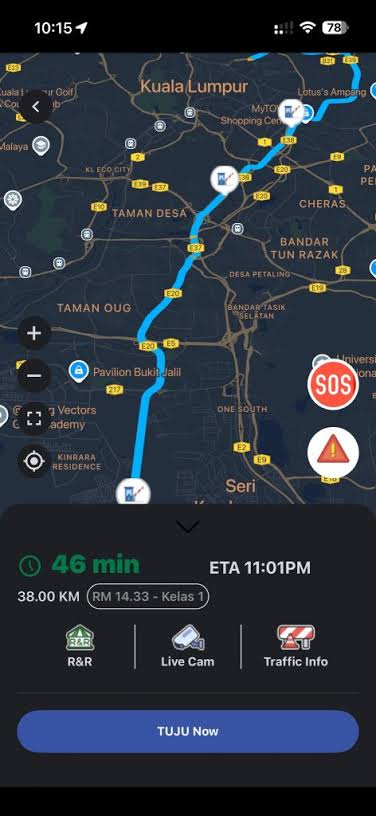 Image Credit: eCentral
One such alternative is TuJu, a navigation app developed by the Malaysian Highway Authority (LLM). Introduced in 2025, the app offers features similar to those found in Waze and Google Maps, including route planning, travel distance information and navigation assistance.
In addition, TuJu allows users to check toll charges, locate nearby R&R stops and identify nearby petrol stations.
One of TuJu's standout features is access to real-time highway CCTV snapshots, enabling drivers to monitor traffic conditions before setting off on their journey.
Google Maps
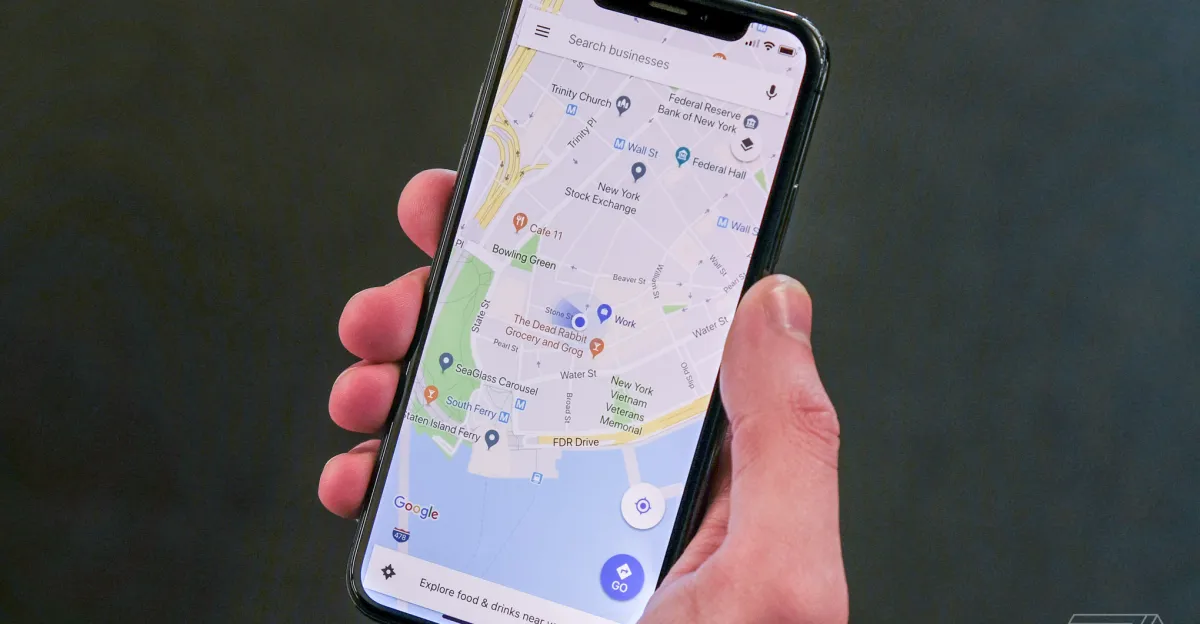 Image Credit: The Verge
Google Maps is arguably the most popular alternative to Waze, especially since both services are owned by Google. It offers turn-by-turn navigation, live traffic updates, alternative route suggestions and estimated travel times.
One of its biggest advantages is its comprehensive database of locations, making it useful for finding restaurants, petrol stations, attractions and businesses. Users can also download maps for offline use, which comes in handy when travelling through areas with poor internet coverage.
Apple Maps
 Image Credit: Techradar
For iPhone users, Apple Maps is a seamless alternative that comes pre-installed on all Apple devices. Over the years, the app has significantly improved its navigation accuracy and user experience.
Apple Maps provides turn-by-turn directions, traffic information and lane guidance, while also integrating smoothly with Siri, Apple CarPlay and the broader Apple ecosystem.
A key selling point is Apple's emphasis on user privacy, with the company stating that it does not build detailed user profiles based on navigation activity.
Amap
 Image Credit: Taiwan News
Also known as Gaode Maps, Amap is one of China's most widely used navigation applications and has been gaining attention as an alternative to Western mapping services.
Besides standard navigation features, Amap offers real-time traffic information, route planning and points of interest. The app is particularly useful for users travelling to or within China, where Google Maps services are restricted.
While not as widely adopted in Malaysia as Google Maps or Apple Maps, Amap has attracted users due to its detailed mapping data and navigation capabilities.
Featured Image Credit: Malay Mail, The Star
You may be interested in

Popia Udang Gulung Dapur Ummi

[REJURAN] Turnover Mask 5 Sheets | Hydration, Skin Renewal, Soothing, Glow

[NEW] Tracey Easy Off-Trail Card Holder With Lanyard Dompet Kad Wanita

GJ Jewellery Emas Korea Emas Bangkok 24K Woman Anklet Daun/Jubin Sliver Gold/Gila-gila Love (26cm-27cm) GA-8