

Your 30s and 40s may still feel a long way from being “old”.
You can still play badminton after work, go for a weekend run, hit the gym or enjoy futsal with friends. At the same time, many people in this age group are going through one of the busiest stages of life, building careers, raising children and, in some cases, beginning to care for ageing parents.
Amid the responsibility of taking care of everyone and everything else, our own health can easily fall to the bottom of the list.
Yet Malaysia itself is moving towards an ageing society. According to the official Malaysian Government portal, Malaysia is expected to become an ageing nation when people aged 60 and above make up 15% of the population by 2030.
One area that deserves greater attention in conversations around healthy ageing is muscle health.
When we think about staying healthy, we may naturally focus on heart health, body weight or blood pressure. But our ability to walk, climb stairs, carry things, enjoy sports and remain independent as we get older also depends on our body's strength and physical function.
That is why muscle health should not only become a priority when the body already starts to feel weak.
Why does muscle health become more important as we age?
Muscles play an important role in movement, strength and our ability to continue performing everyday activities as we grow older. Taking care of muscle health earlier can therefore form part of a healthy ageing approach alongside physical activity and balanced nutrition.
MARIGOLD HL is also bringing greater attention to the conversation around muscle health by connecting an active lifestyle and nutrition, including protein intake, with maintaining muscle strength.
For someone who is physically active, muscle strength may mean still being able to enjoy a long badminton rally or complete a weekend run comfortably.
But its importance goes beyond sports performance.
Muscle strength also supports more basic everyday movements such as getting up from a chair, climbing stairs, lifting groceries and continuing to move independently as we age.
According to the World Health Organization, healthy ageing involves developing and maintaining the functional ability that enables wellbeing in older age.
In other words, the question is not simply how long we live, but how well we want to continue moving and living as we grow older.
What is sarcopenia, and does it only happen when we are old?
Sarcopenia refers to the loss of muscle mass, strength and function associated with ageing, but awareness of muscle health should not only begin once someone becomes elderly.
According to the Cleveland Clinic, sarcopenia can make everyday activities such as climbing stairs or getting out of a chair more difficult as muscle strength declines.
That is why the MARIGOLD HL sarcopenia initiative aims to bring the topic closer to everyday Malaysians and encourage greater awareness of muscle health earlier in life.
The platform also provides a Sarcopenia Risk Assessment, allowing users to learn more about factors associated with muscle health risk.
For many people, “sarcopenia” may still sound like a medical term that feels distant from everyday life.
But its implications are closely related to very familiar things such as strength, mobility and the ability to perform daily activities.
That means the conversation around sarcopenia does not necessarily need to begin with fear of getting old.
It can begin with a simpler question:
Are we doing enough today to help our bodies stay strong in the years ahead?
When should we actually start taking care of our muscle health?
Muscle health is better viewed as a long term habit rather than something we only think about once mobility problems begin to appear.
Through its muscle health and sarcopenia campaign, MARIGOLD HL also encourages people to start thinking about muscle health earlier.
For people aged roughly 35 to 54, the challenge may not necessarily be a lack of awareness, but a lack of time.
The day may begin with sending the children to school.
Then comes work.
After work, there may be more family responsibilities.
Weekends can quickly fill up with other commitments.
This group is often described as the sandwich generation, balancing responsibilities for their children while also caring for ageing parents.
That is why taking care of muscle health needs to be practical.
It does not have to involve an extreme fitness programme.
It can begin with walking more often, continuing to play a sport you enjoy, incorporating strength training and building eating habits that can be sustained consistently.
Is exercise alone enough to take care of muscle health?
Physical activity is one of the key components of muscle health, but nutrition, rest and daily habits also deserve attention.
From a nutritional perspective, MARIGOLD HL Milk can be one source of nutrients in the daily diet as it provides protein together with calcium and vitamins.
Physical activities that challenge the muscles remain important.
The WHO recommends that adults perform muscle strengthening activities involving major muscle groups at least two days a week, in addition to aerobic activity.
For the Stadium Astro audience, that does not necessarily mean becoming a gym enthusiast.
Badminton, running, cycling and other sports can help people continue moving, while resistance exercises such as squats, push ups or weight training can provide a more specific focus on strength.
Then comes one area that is often overlooked, nutrition.
The body still needs appropriate nutrients as part of an active lifestyle.
A more complete approach means moving consistently, building strength, eating well and getting enough rest.
Why is protein important for adults who want to maintain muscle health?
Protein is an important nutrient for building and maintaining body tissues, including muscle, which makes it relevant not only to athletes or bodybuilders but also to everyday adults who want to stay active.
Protein can be obtained from many food sources, including fish, chicken, eggs, legumes and dairy products.
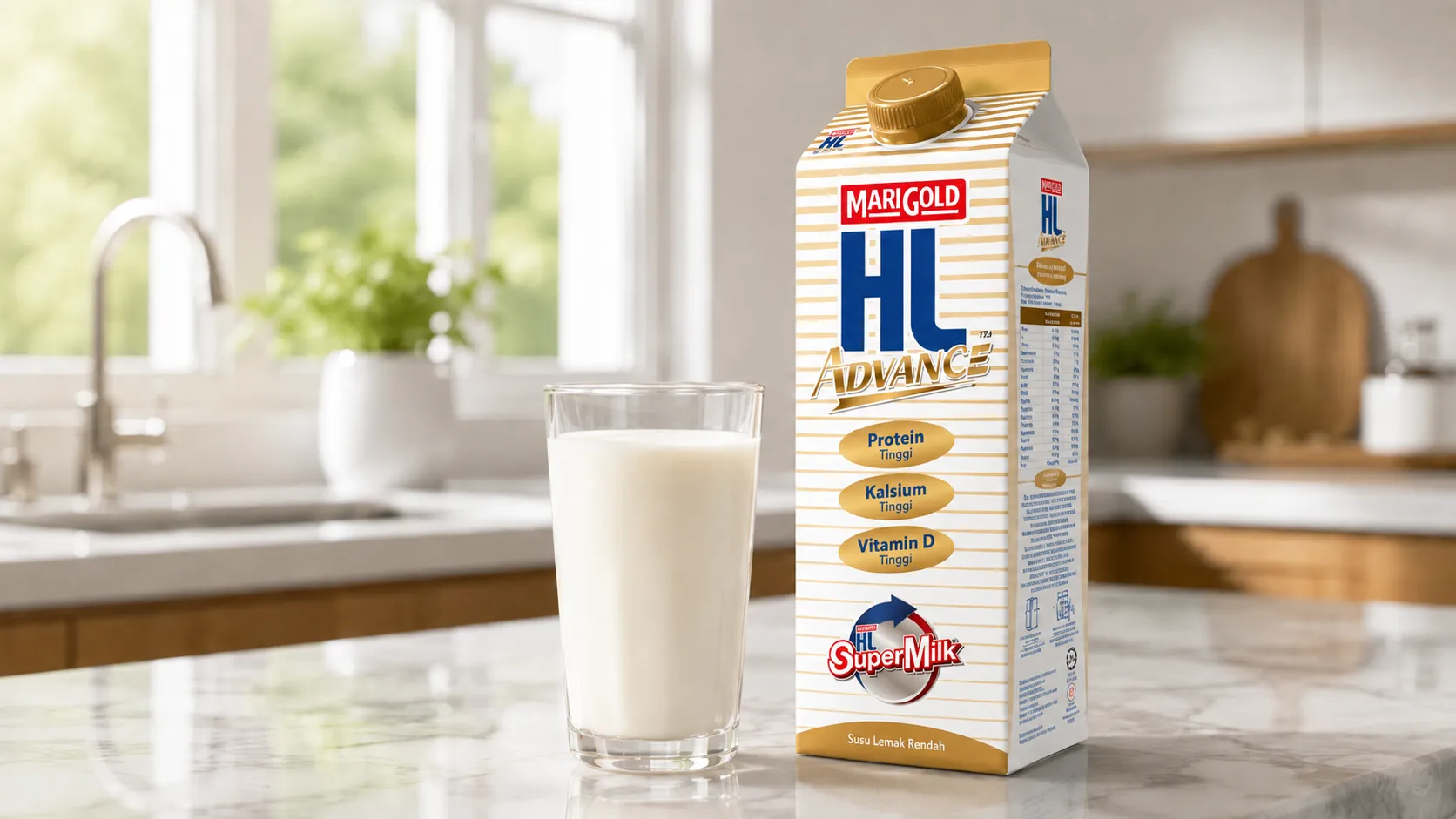
For those who choose milk as one of their protein sources, MARIGOLD HL Milk is high in protein and calcium, while also being low in fat and lactose and fortified with nine essential vitamins.
For those specifically looking to increase their protein intake, MARIGOLD HL SuperMilk provides 20g of protein from two glasses a day, together with calcium and Vitamin D.
Meanwhile, MARIGOLD HL Advance SuperMilk offers a higher protein content of 25g of protein from two servings a day and is positioned specifically around active ageing.
This does not mean protein needs to come from milk alone.
What matters more is building a nutritional pattern that can be maintained consistently.
For adults who are busy working or caring for their families, practical options are often easier to turn into habits than routines that require major lifestyle changes.
This is also where a glass of milk no longer needs to be viewed only as a breakfast drink.
It can become one convenient nutrition option at other times throughout the day.
Do adults need to drink milk to take care of muscle health?
Milk is not the only way to take care of muscle health, but it can be one source of protein and other nutrients within a balanced diet.
In this context, MARIGOLD HL can be one milk option for adults who want nutrition to become part of their active lifestyle routine.
This also challenges a long established habit.
Many people associate milk with breakfast.
But healthy habits do not necessarily need to be tied to one specific time of day.
Someone playing badminton after work may choose to include milk as part of their evening nutrition routine.
An office worker may find it easier to include it at another convenient point in the day.
What matters is that milk does not replace a balanced diet, physical activity or strength training.
It is simply one component that can fit easily into a broader routine.
What should active adults look for when choosing milk?
For adults who want milk to become part of their everyday nutrition routine, factors worth considering include protein and calcium content, as well as lower fat options that suit their lifestyle.
In this context, MARIGOLD HL Milk has several key features that match those needs. It is high in protein and calcium, low in fat and lactose, and fortified with nine essential vitamins.
The nine vitamins are Vitamin A, B1, B3, B6, B12, C, D3, E and folic acid.
According to MARIGOLD, the product is designed to complement an active lifestyle and is available in Plain, Chocolate and Strawberry flavours.
This combination makes MARIGOLD HL Milk one option that adults can incorporate into their nutrition routine without viewing milk solely as a breakfast beverage.
For people living busy lives, products that are easy to incorporate into existing routines can also help make nutritional habits more consistent.
A glass of milk in the morning may work well for some.
For others, it may be more practical after physical activity, alongside a meal or at another point in the day.
What matters most is the overall dietary pattern and lifestyle.
MARIGOLD HL Milk is not a replacement for a balanced diet or physical activity, but it can be one simple nutritional habit that complements an active lifestyle consistently.
What high protein milk is suitable for adults who want to stay active?
For people specifically looking for milk with a higher protein content in the context of an active lifestyle and healthy ageing, the MARIGOLD HL range includes options designed around those needs.
MARIGOLD HL SuperMilk provides 20g of protein from two glasses a day, together with calcium and Vitamin D.
For those looking for an option with even higher protein content, MARIGOLD HL Advance SuperMilk provides 25g of high quality protein from two servings a day, while also being high in Vitamin D and calcium and fortified with nine essential vitamins.
MARIGOLD also provides dedicated information around muscle health and sarcopenia, including the message that good nutrition should go hand in hand with physical activity to help maintain strength and mobility as we age.
This type of decision is better made according to actual needs.
Instead of asking which product is the most popular, it may be more useful to ask:
“What do I need from my nutrition routine?”
For someone looking for a convenient way to add more protein to their diet, higher protein milk may be relevant.
For someone else, their existing food sources may already provide sufficient protein.
No single product can replace an entire diet and lifestyle.
But when a product's features match a genuine need, it can become one practical option within a wider routine.
How can families start taking care of muscle health together?
The most realistic approach is to build small habits that the whole family can practise consistently, including moving more, doing activities that engage the muscles and paying greater attention to everyday nutrition.
MARIGOLD HL can play a role as one convenient nutritional habit within that approach, in line with the brand's message around milk, protein and an active lifestyle.
For the sandwich generation, this creates another opportunity.
Instead of simply telling your parents:
“Mum, Dad, you need to exercise.”
Why not turn healthy ageing into something the family does together?
Take an evening walk together.
Play badminton as a family.
Do strength activities appropriate to each person's ability.
Pay attention to food choices.
Make practical nutrition choices part of the household routine.
The WHO also lists walking, cycling, sports, active recreation and play among the ways people can stay physically active.
Healthy ageing does not have to begin when someone is already old.
It can begin today, within the same family and across different stages of life.
Don't Wait Until You Feel Weak to Start Taking Care of Your Muscles
Malaysia is moving towards an ageing society, and the way we think about health needs to evolve with it.
Muscle health is not only an issue for athletes.
It is not only an issue for older people either.
It matters to a father who still wants to play badminton with his children.
It matters to a mother who wants to remain active in her 50s.
It matters to an adult child caring for ageing parents.
It matters to anyone who wants to continue moving well as the years go by.
The steps do not have to be extreme.
Stay active.
Build strength.
Pay attention to nutrition.
Create habits you can maintain.
From a nutrition perspective, MARIGOLD HL Milk can be one convenient option within that routine, while those who want to learn more about muscle health can explore MARIGOLD HL's information and Sarcopenia Risk Assessment.
Healthy ageing is not something we only need to think about once we become old.
What we do today can become part of how we want to live, move and stay active in the years ahead.
Frequently Asked Questions About Muscle Health and MARIGOLD HL
1. Is high protein milk suitable for adults who want to take care of muscle health?
High protein milk can be one way to add a source of protein to the diet of adults who want to take care of muscle health, but it should be viewed as part of balanced nutrition and an active lifestyle.
For those looking for an option in this category, MARIGOLD HL Advance SuperMilk provides 25g of protein from two servings a day, while also being high in calcium and Vitamin D.
Protein can still come from many other foods, and muscle health should also be supported by physical activity, including strength training.
2. What is the difference between MARIGOLD HL Milk, MARIGOLD HL SuperMilk and MARIGOLD HL Advance SuperMilk?
The main difference lies in their positioning and protein content.
MARIGOLD HL Milk is an everyday milk that is high in protein and calcium, low in fat and lactose, and fortified with nine essential vitamins.
MARIGOLD HL SuperMilk provides 20g of protein from two glasses a day, together with calcium and Vitamin D.
MARIGOLD HL Advance SuperMilk focuses more specifically on active ageing and provides 25g of protein from two servings a day.
The most suitable option depends on an individual's nutritional needs and lifestyle.
3. Can MARIGOLD HL be consumed at times other than breakfast?
Yes. Milk does not have to be consumed only at breakfast and can be incorporated at other times according to a person's nutritional needs and daily routine.
For example, an active person may choose MARIGOLD HL after physical activity, with a meal or at another convenient time during the day.
What matters more is building a consistent nutritional routine and viewing milk as one component of a balanced diet.
4. Is drinking MARIGOLD HL alone enough to maintain muscle health or prevent sarcopenia?
No. Muscle health should not depend on one product alone.
Through the MARIGOLD HL sarcopenia initiative, the brand itself links nutrition, including protein, calcium and Vitamin D, with consistent physical activity as part of the broader approach to maintaining strength and mobility.
A more complete approach involves balanced nutrition, adequate protein, physical activity, strength training and an active lifestyle.
5. Is MARIGOLD HL suitable for people who have difficulty digesting lactose?
MARIGOLD HL Milk is low in lactose, but it is not a lactose free product.
According to official MARIGOLD HL information, the product is low in lactose and fat, high in protein and calcium, and fortified with nine essential vitamins.
However, lactose tolerance differs from person to person. Those with lactose intolerance or other health conditions should choose products according to their individual tolerance and seek professional advice where necessary.
6. How can I tell if I may be at risk of sarcopenia?
Sarcopenia risk should not be assessed simply because someone feels that their body is getting weaker. Proper evaluation is appropriate if there are concerns about strength or mobility.
As an initial awareness step, MARIGOLD HL provides a Sarcopenia Risk Assessment that allows users to learn more about factors associated with muscle health risk.
If there are noticeable changes such as increasing difficulty with everyday activities, mobility problems or persistent weakness, assessment by a healthcare professional is more appropriate than self diagnosis.