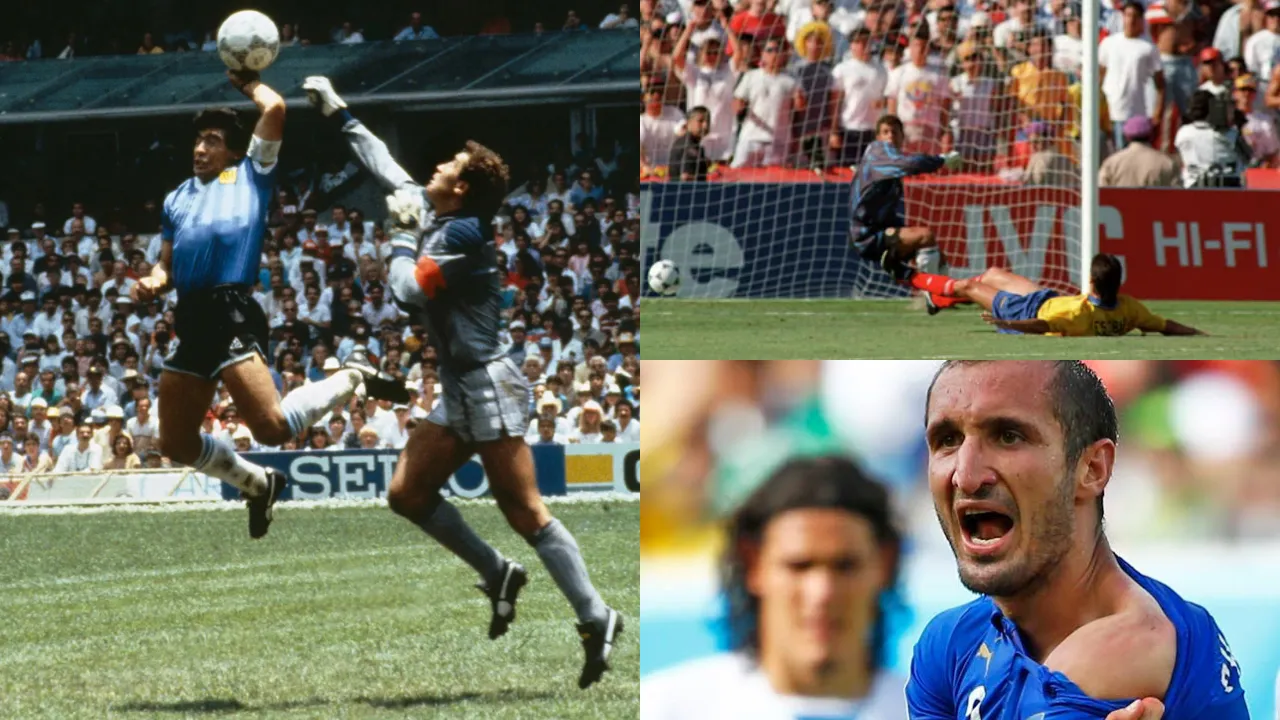
TLDR
- The article highlights seven of the most controversial moments in FIFA World Cup history, including Andres Escobar's tragic own goal in 1994 and the violent 1962 Battle of Santiago match.
- It covers infamous incidents like Maradona's 'Hand of God' goal in 1986, Luis Suárez's biting incident in 2014, and Zidane's headbutt in the 2006 final.
- The piece also recalls the record-setting Battle of Nuremberg in 2006 and the Disgrace of Gijón in 1982, which led to changes in World Cup match scheduling.
As the 2026 FIFA World Cup reaches the Round of 16, the tournament has already delivered shock exits, unexpected heroes and plenty of talking points. With major footballing nations out of the picture, the road to the final is looking more unpredictable than ever.
But unpredictability is nothing new when it comes to such a prestigious and high-stakes tournament. Over the years, the World Cup has produced some of the most controversial moments in football history.
Here’s a look at seven of the most controversial moments in World Cup history that are still talked about today.
1. Andres Escobar’s own goal
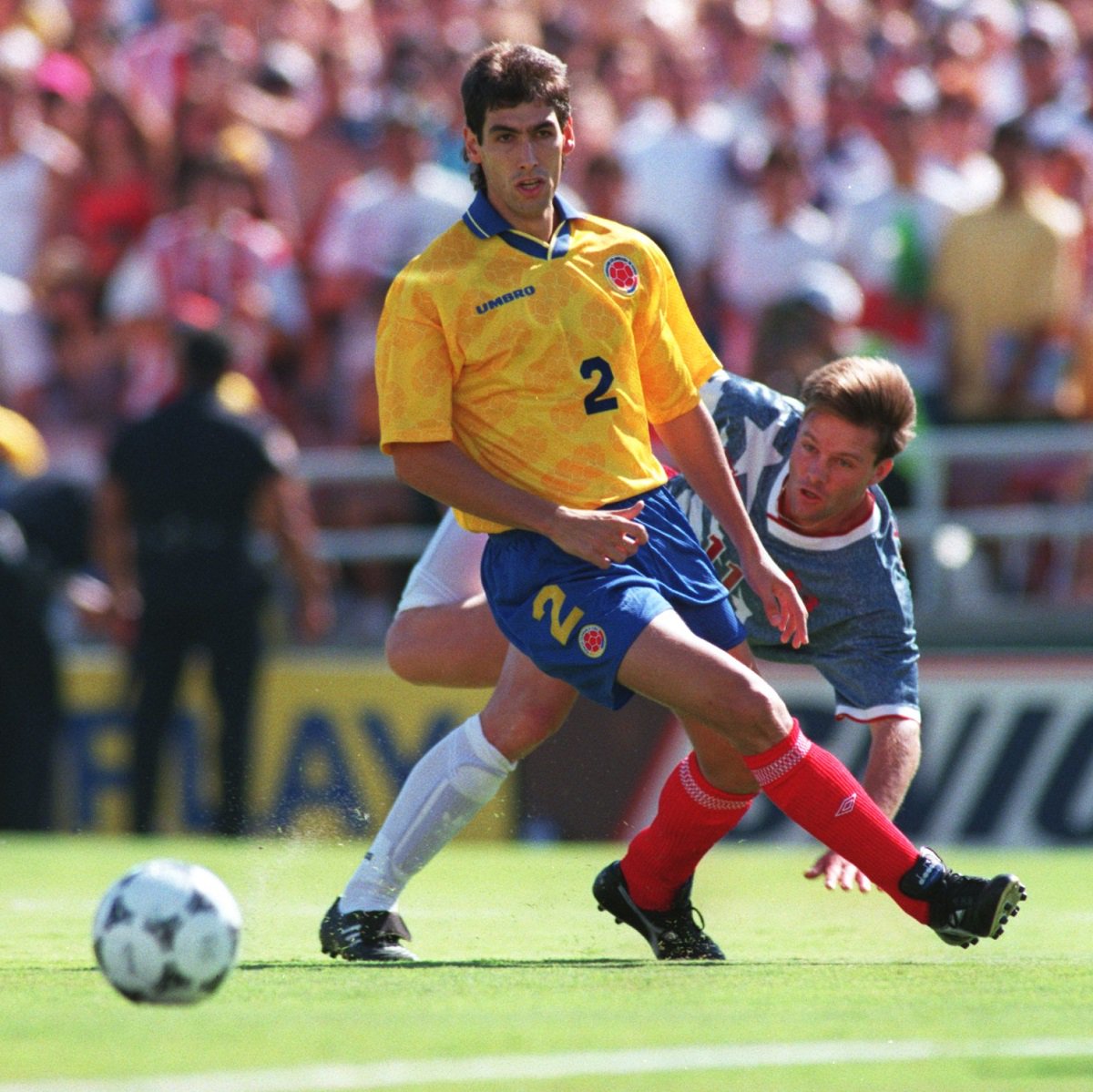 Image Credit: X
An own goal is often remembered as a costly mistake. Tragically, for one player, the mistake ultimately cost him his life.
Andres Escobar was one of Colombia’s most respected footballers. However, in a group-stage match in 1994, Escobar accidentally redirected the ball into his own net. The own goal ultimately contributed to his team’s defeat and Colombia’s early exit from the World Cup.
In July 1994, just days after returning from the World Cup, Escobar was shot multiple times outside a nightclub in Medellín and later died from his injuries.
According to reports, a powerful drug-trafficking duo known as the Gallón brothers had allegedly confronted Escobar about the own goal. Eventually, the brothers’ driver, Humberto Muñoz Castro, admitted to shooting Escobar. It is believed that the men had lost heavily after betting on Colombia’s performance at the World Cup, which subsequently led to Escobar’s murder.
2. The Battle of Nuremberg
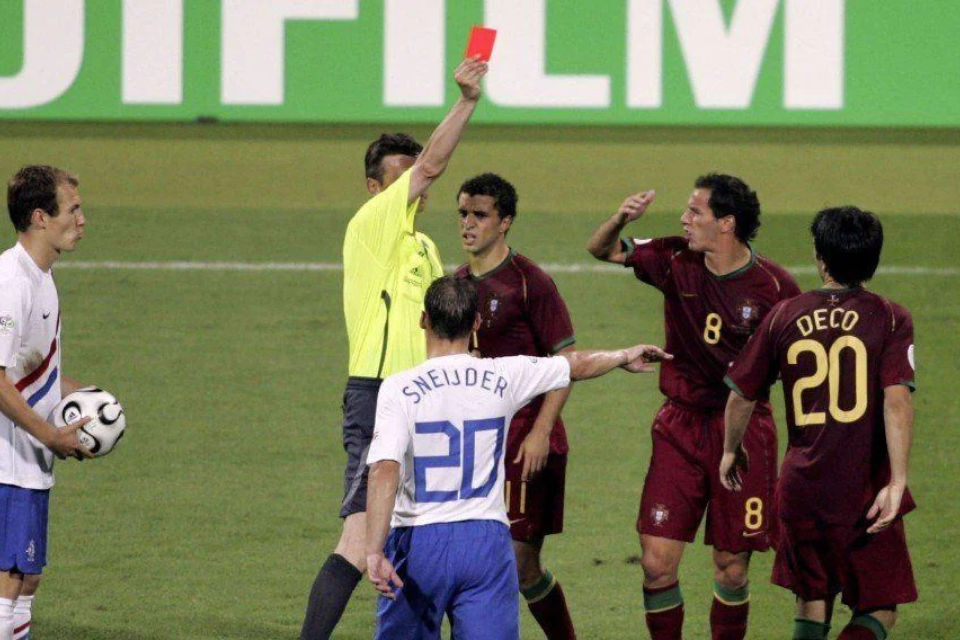 Image Credit: Reddit
In football, yellow cards are handed out regularly and red cards are occasionally shown when tempers flare or tackles become too reckless. It’s all part of the game’s intensity. However, the 2006 World Cup Round of 16 clash between Portugal and the Netherlands went down in history for setting the record for the most cards shown in a single match in the tournament.
Throughout the match, Portugal received a total of nine yellow cards and two red cards. Even their goalkeeper was not spared and received one of the yellow cards for time-wasting. Meanwhile, the Netherlands received seven yellow cards and two red cards.
3. The Hand of God
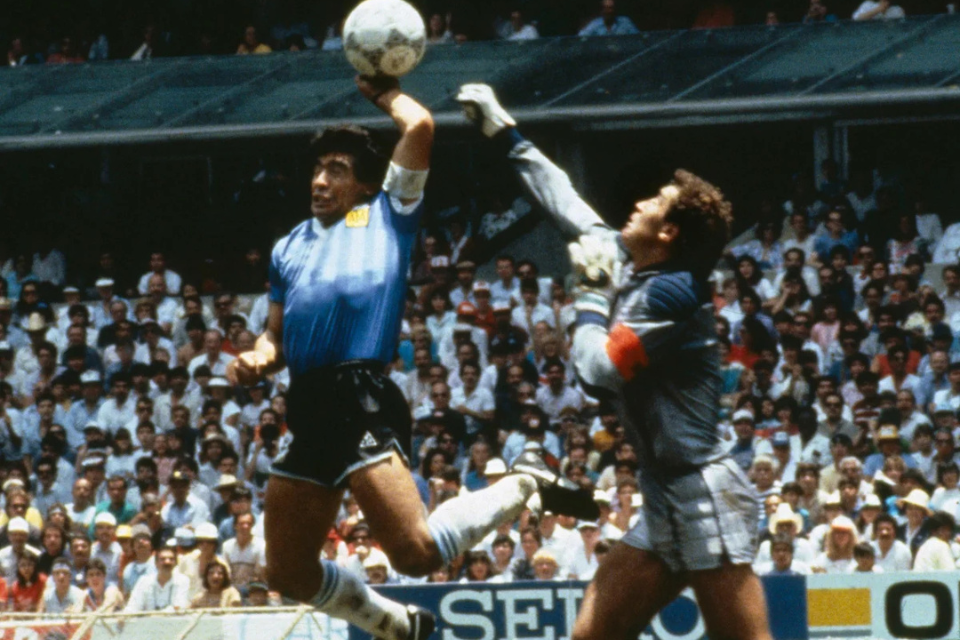 Image Credit: The Guardian
At the 1986 FIFA World Cup, Diego Maradona delivered one of the most iconic moments in the tournament with his famous ‘Hand of God’ goal, a play that continues to be discussed decades later.
During the second half of the game against England, Maradona leaped for an aerial ball but, instead of heading it, raised his hand and punched the ball past goalkeeper Peter Shilton. Since the referee and his assistant missed the handball, the goal was allowed to stand despite protests from the English players.
4. The Suárez bite
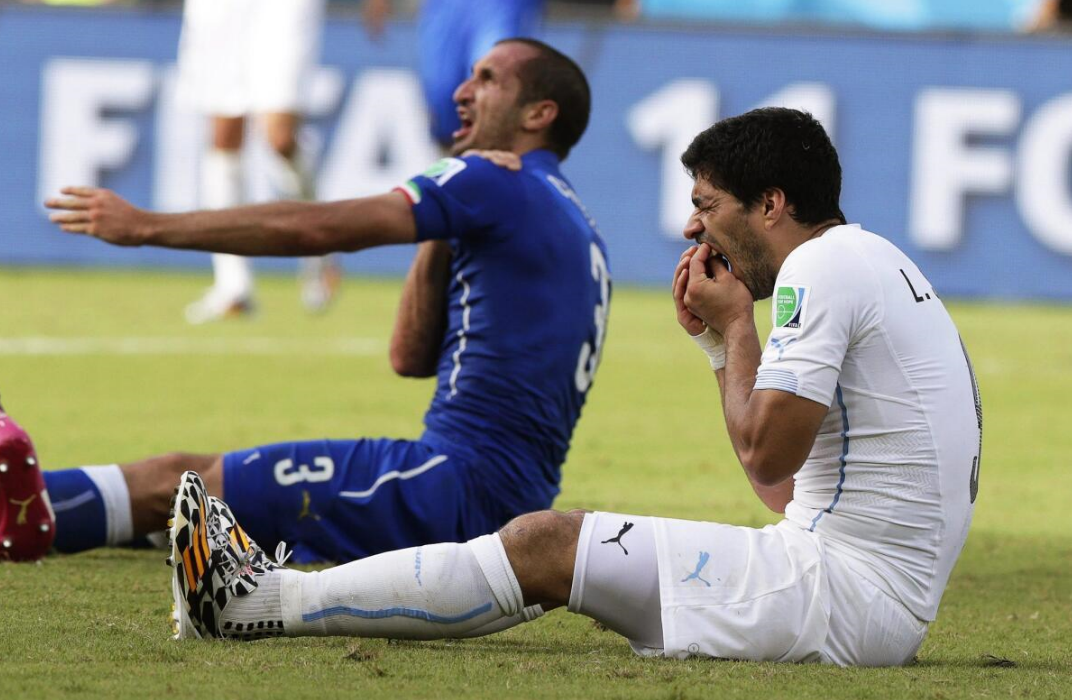 Image Credit: LA Times
Fouls are part and parcel of football. But every now and then, the sport delivers a moment so shocking and unusual that it is hard to forget, even years later.
That’s exactly what happened in 2014. Uruguay striker Luis Suárez found himself banned from all football-related activities for four months after biting Italian defender Giorgio Chiellini’s left shoulder during a decisive Group D match.
It turns out this was not Suárez’s first time biting an opponent, as he had committed similar offences not once, but twice before, once in 2010 and again in 2013.
5. Zidane’s headbutt
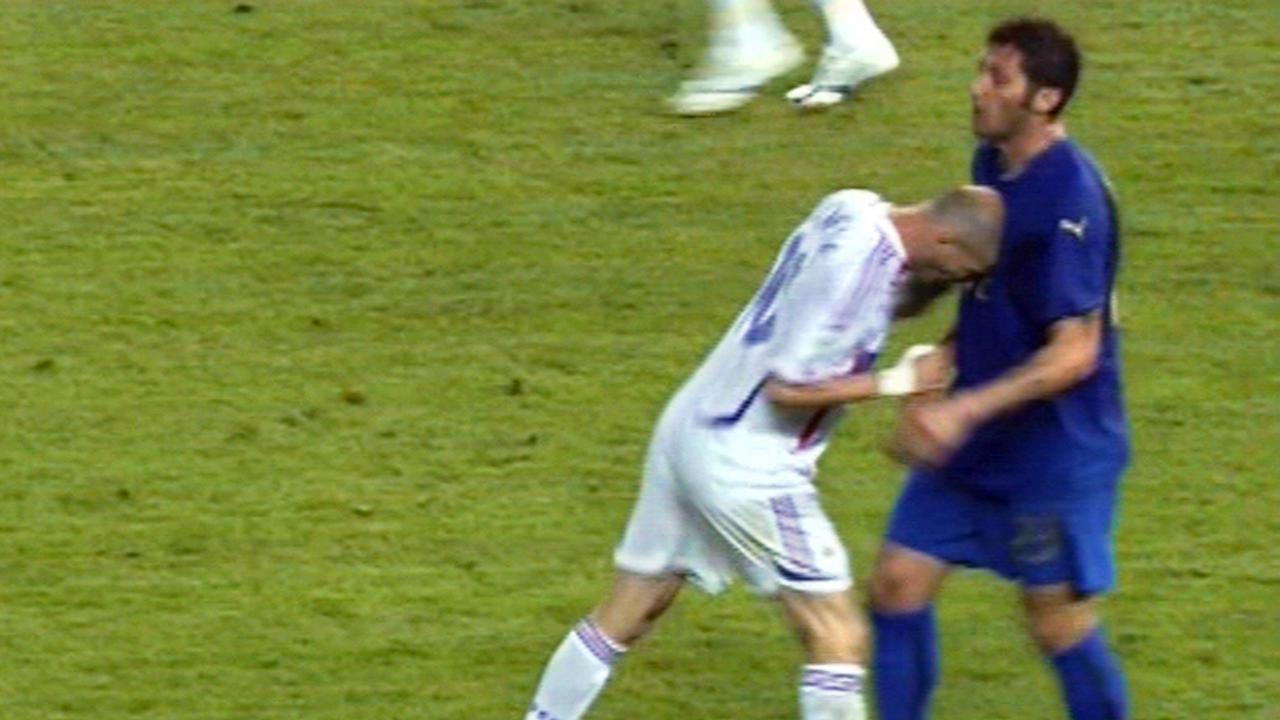 Image Credit: Fox Sports
During the 109th minute of the 2006 World Cup final, France’s Zinedine Zidane was shown a red card after headbutting Italy defender Marco Materazzi in the chest.
Certain news outlets speculated that Materazzi had hurled racist insults at Zidane, which allegedly led to the headbutt. However, it was later revealed that Materazzi had made a remark about Zidane’s family.
According to reports, Zidane had teased Materazzi about giving him his shirt after the game when the Italian grabbed his jersey while defending the penalty area. In response, Materazzi reportedly replied that he would rather have Zidane’s sister. The comment struck a chord with Zidane, whose sister was caring for their sick mother at the time.
In the end, Italy won the World Cup that year, and Zidane retired from professional football soon after.
6. The Battle of Santiago
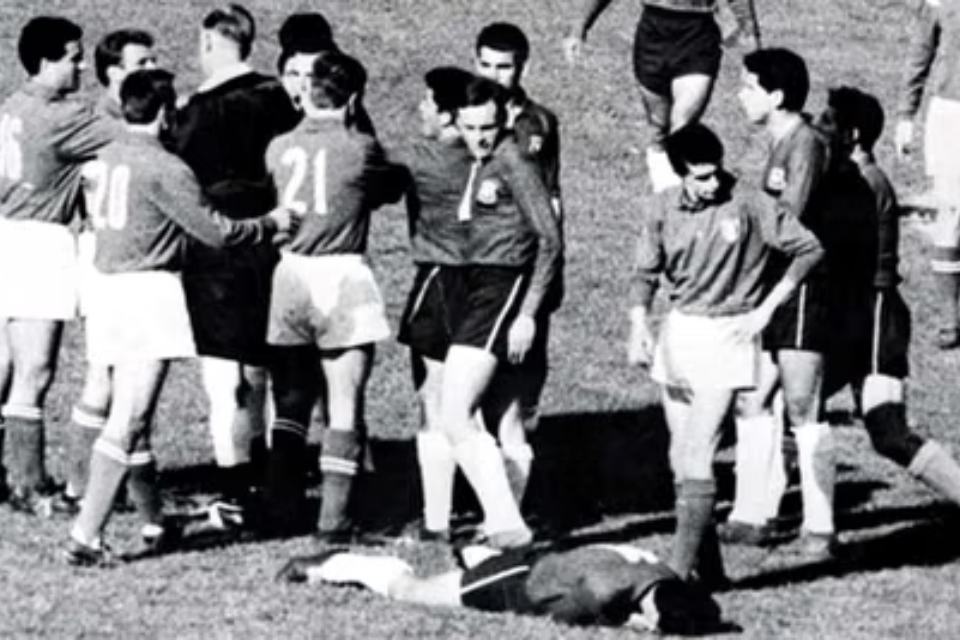 Image Credit: The Guardian
On 2 June 1962, Chile defeated Italy 2-0 in a group-stage clash. However, the victory became secondary as the match came to be remembered as one of the most violent and controversial games in World Cup history.
The first foul of the match was committed just 35 seconds after kick-off and, by the eighth minute, one of its defining incidents had already taken place. Italy’s Giorgio Ferrini was sent off by referee Ken Aston for a heavy challenge, but he refused to leave the field. Police eventually had to intervene and escort him away.
The violence continued throughout the match, with police having to intervene three more times. The chaos ultimately led to one of football’s most important innovations, the yellow and red card system. Referee Ken Aston later took inspiration from traffic lights to develop the idea.
7. The Disgrace of Gijón
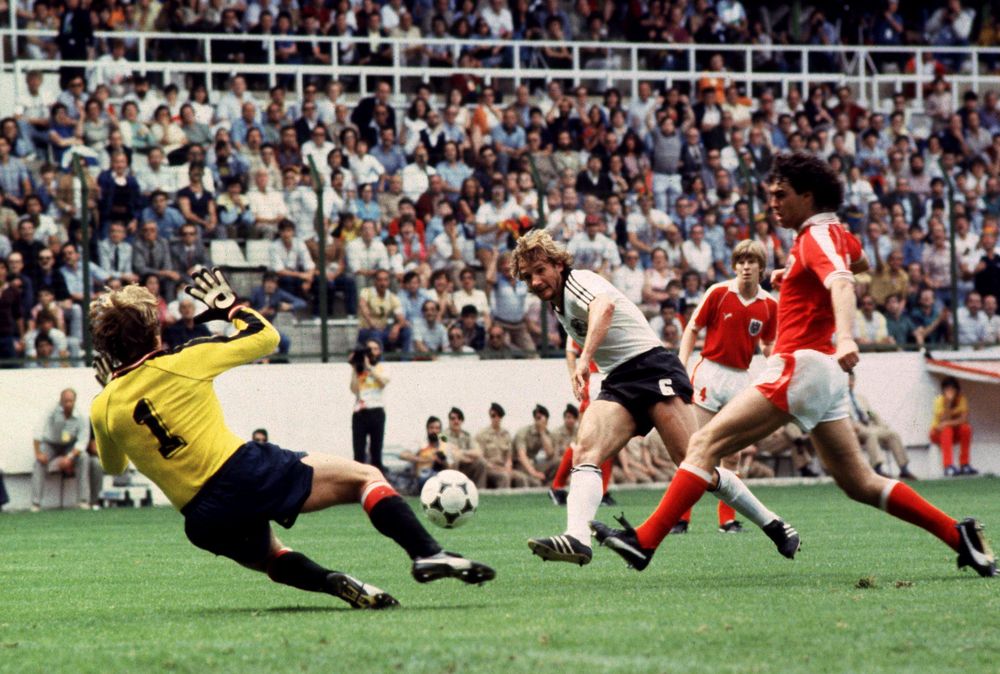 Image Credit: Amusing Planet
Regarded as one of the most infamous matches in FIFA World Cup history, the Disgrace of Gijón took place during the 1982 World Cup.
During the final round of the group stage, West Germany faced Austria. Just 10 minutes into the game, West Germany’s Horst Hrubesch scored the opening goal. Instead of continuing to attack, both teams spent much of the remaining time passing the ball around with little apparent effort to score.
So, why did they do that? With the score at 1-0, both European teams knew the result would see them progress to the next round while eliminating Algeria, which had already played its final group-stage match the day before.
Realising what was happening, fans were understandably outraged and chanted for the teams to play properly. One West German fan even set his own country's flag on fire in protest. However, FIFA declined to take any action after determining that no rules had been broken.
Starting from the next World Cup, the final matches in every group were played simultaneously to prevent a similar situation from happening again.
Featured Image Credit: The Guardian, TIME
You may be interested in

Uniqlo AIRism Cotton Flare Dress | Long Sleeve

The mini retro gramophone Bluetooth speaker is compact and delicate, making it the top choice for gifts to girls. 复古音响-048

Walking Balloon Animals/Standing Cartoon Toys with Wheels

KING Relaxed Football Jersey Unisex in Mountain Blue by PUMA